Emotional Meditation—By Micah Siemens
“Ascribe to the Lord, you heavenly beings, ascribe to the Lord glory and strength.”
Right away, David isn’t speaking to people—he’s summoning heaven itself. He’s calling on the sons of God, the angelic host, to join him in awe. It’s as if he’s saying, “You who stand near the throne—don’t forget who He is.” This psalm doesn’t argue for God’s existence; it announces His reality. It’s pure worship—thunder rolling into poetry.
“Ascribe to the Lord the glory due His name; worship the Lord in the splendor of His holiness.”
David’s words tremble with reverence. He’s not describing our worship—he’s describing creation’s. This is what the world sounds like when it remembers its Maker. Then, the heart of it all—the phrase that keeps echoing: “The voice of the Lord…” It appears seven times. Each one like a strike of lightning.
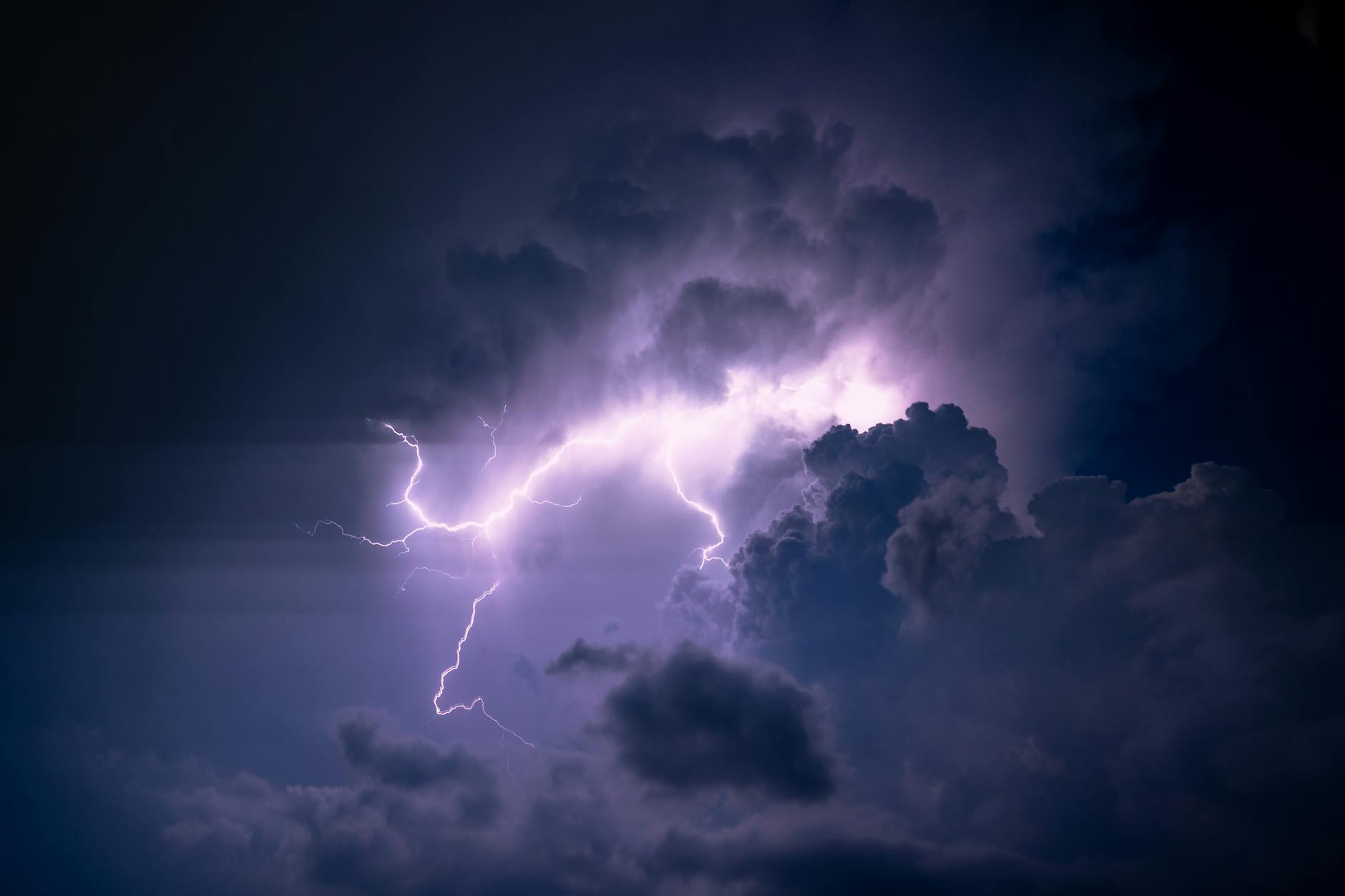
“The voice of the Lord is over the waters; the God of glory thunders, the Lord thunders over the mighty waters.”
You can almost see it—storm clouds gathering, waves rising, as David watches the chaos of nature bow under the sound of God’s voice. To David, thunder isn’t random—it’s revelation. Each roll of the sky is a sermon about sovereignty.
“The voice of the Lord is powerful; the voice of the Lord is majestic.” There’s no metaphor needed—it’s the sound that orders galaxies and humbles kings.
Then: “The voice of the Lord breaks the cedars; the Lord breaks in pieces the cedars of Lebanon.”
Those cedars were the giants of the ancient world—symbols of strength and stability. And yet, under God’s voice, they splinter like twigs. It’s not destruction for its own sake—it’s a reminder that nothing strong is stronger than Him.
Then: “He makes Lebanon leap like a calf, Sirion like a young wild ox.”
Even the mountains dance when He speaks. It’s a wild image—creation itself responding to the rhythm of its Creator.
“The voice of the Lord strikes with flashes of lightning.”
“The voice of the Lord shakes the desert; the Lord shakes the Desert of Kadesh.”
Even the barren places tremble. Even silence feels His pulse. And then this breathtaking detail:
“The voice of the Lord twists the oaks and strips the forests bare. And in His temple all cry, ‘Glory!’”
Creation’s chaos becomes creation’s choir. Every sound, every quake, every crash turns into worship. There’s no resistance—only reverence. Then, as the thunder quiets and the rain fades, David ends on this peaceful note:
“The Lord sits enthroned over the flood; the Lord is enthroned as King forever.”
Over the flood. That phrase ties us all the way back to Genesis—as if to say, even when the world drowns, God doesn’t. He reigns above every deluge—literal or emotional. And then the benediction, soft and steady:
“The Lord gives strength to His people; the Lord blesses His people with peace.”
What a paradox—the God whose voice shakes the earth is also the One who gives peace. The same thunder that rattles creation quiets the soul. It’s like David is saying: The storm reveals His power; the peace reveals His heart. Psalm 29 is what happens when worship forgets itself and simply points upward. It’s not about us—it’s about Him. It teaches us that divine power isn’t meant to scare us, but to steady us. Because the same voice that splits trees is the one that still whispers, “Be still.”

Leave a Reply